
Pirots 5 itself
The reference point: three worlds under one game, a 6x6 grid growing to 8x8, up to 96.0% payback and a 10,000x ceiling on a round.
Collection instead of paylines, progress that survives the session, a bought entry that costs tempo rather than payback, and a 7 of 10 spread between the small rounds and the enormous ones. Know which of the four you came for and the next game picks itself.
// GAMES
Five paths, each earning its place for a specific reason.
The reference point: three worlds under one game, a 6x6 grid growing to 8x8, up to 96.0% payback and a 10,000x ceiling on a round.
Cursed Temple, The Kraken and City of Gold each bring their own corner fight and coin game, and nine tokens open a fourth world that stays open.
Six games, each with its own grid and its own maths: the place to go if it is the franchise rather than this release you are after.
The closest match in our catalogue: another grid game without fixed paylines, with an expanding play area and a priced entry into the bonus.
Test all four traits yourself on EUR 5,000 of play credits before you decide what to look for elsewhere.
// COMPARISON
| Dimension | Pirots 5 | Aftermath |
|---|---|---|
| Bought entry | X-iter at 3x, 10x, 50x, 100x and 250x the bet, with the game's own payback | A priced entry into the bonus spins, bought from the base game |
| Play area | 6x6 expanding to 8x8 | Four reels by six rows, expanding to six by eight |
| Progression | Gems climb seven payout levels; nine tokens unlock a fourth world permanently | A round multiplier that climbs with every avalanche and resets between rounds |
| Provider | ELK Studios | NetEnt |
| Win model | CollectR: four birds collect adjacent gems, without fixed paylines | Scatter pays: eight or more matching symbols anywhere in view |
“Something like Pirots 5” is not one request, it is four. The collection mechanic, the progress that survives a session, a bonus with a price on it and the size of the swing are four separate things to want, and no single recommendation covers all of them. Work out which one brought you here and the search gets short.
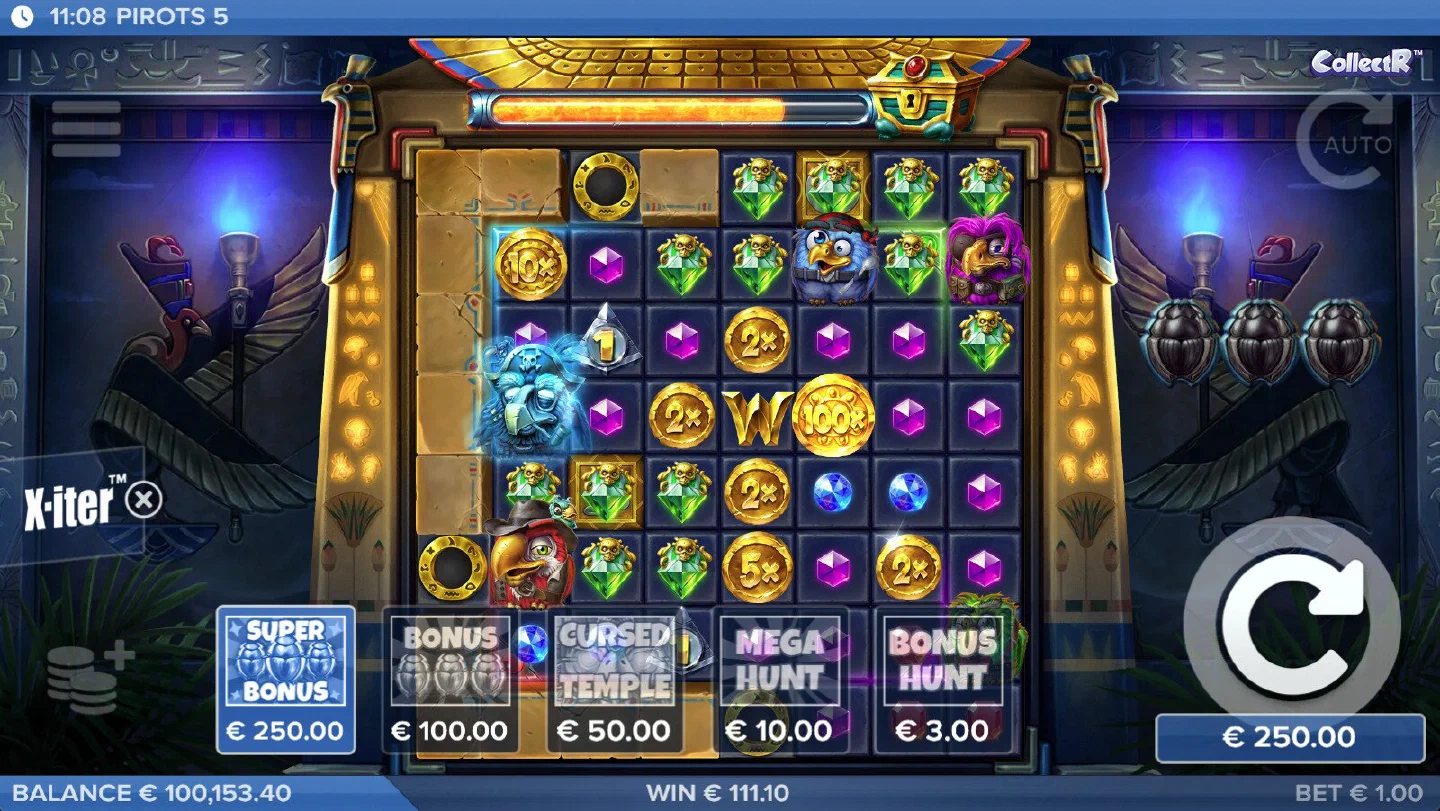
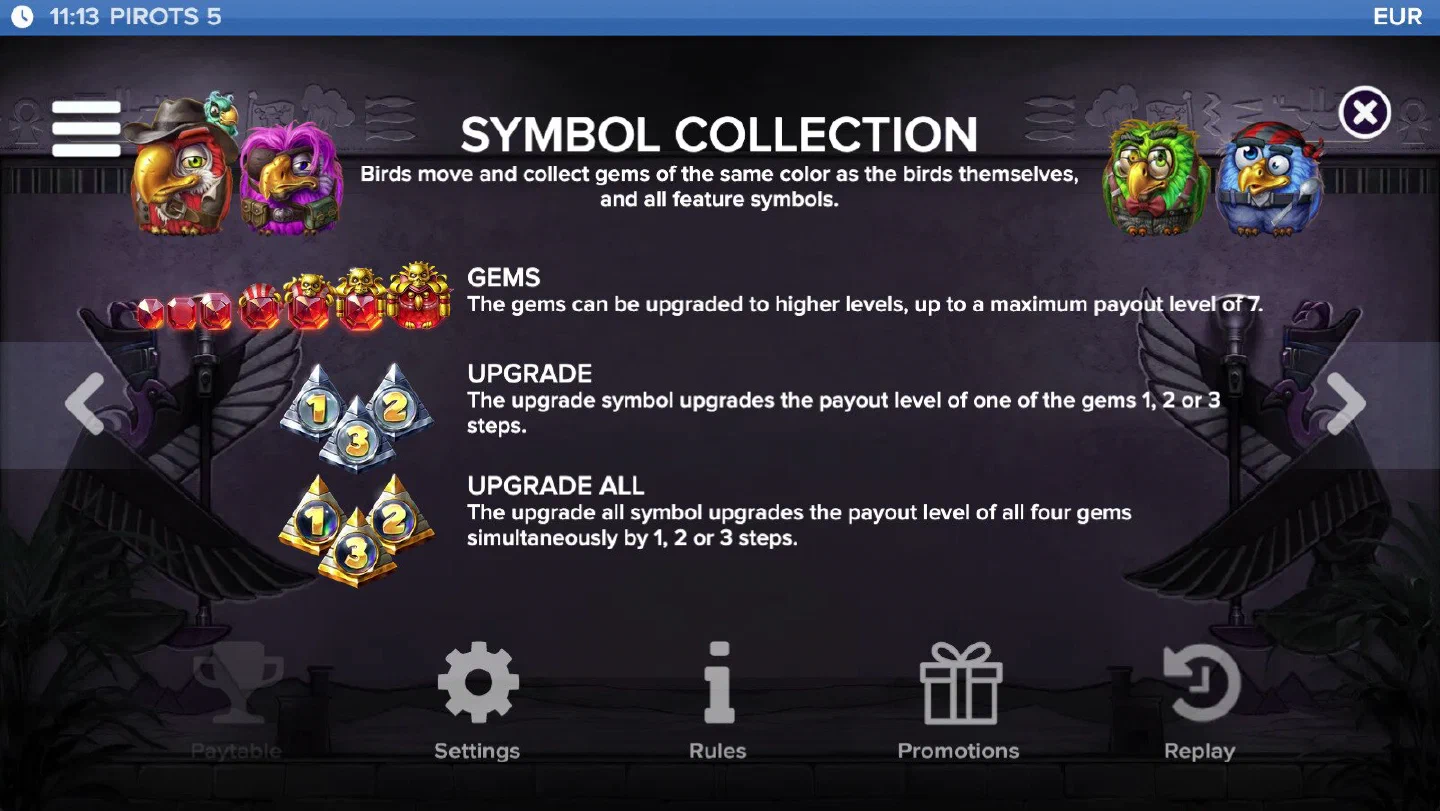
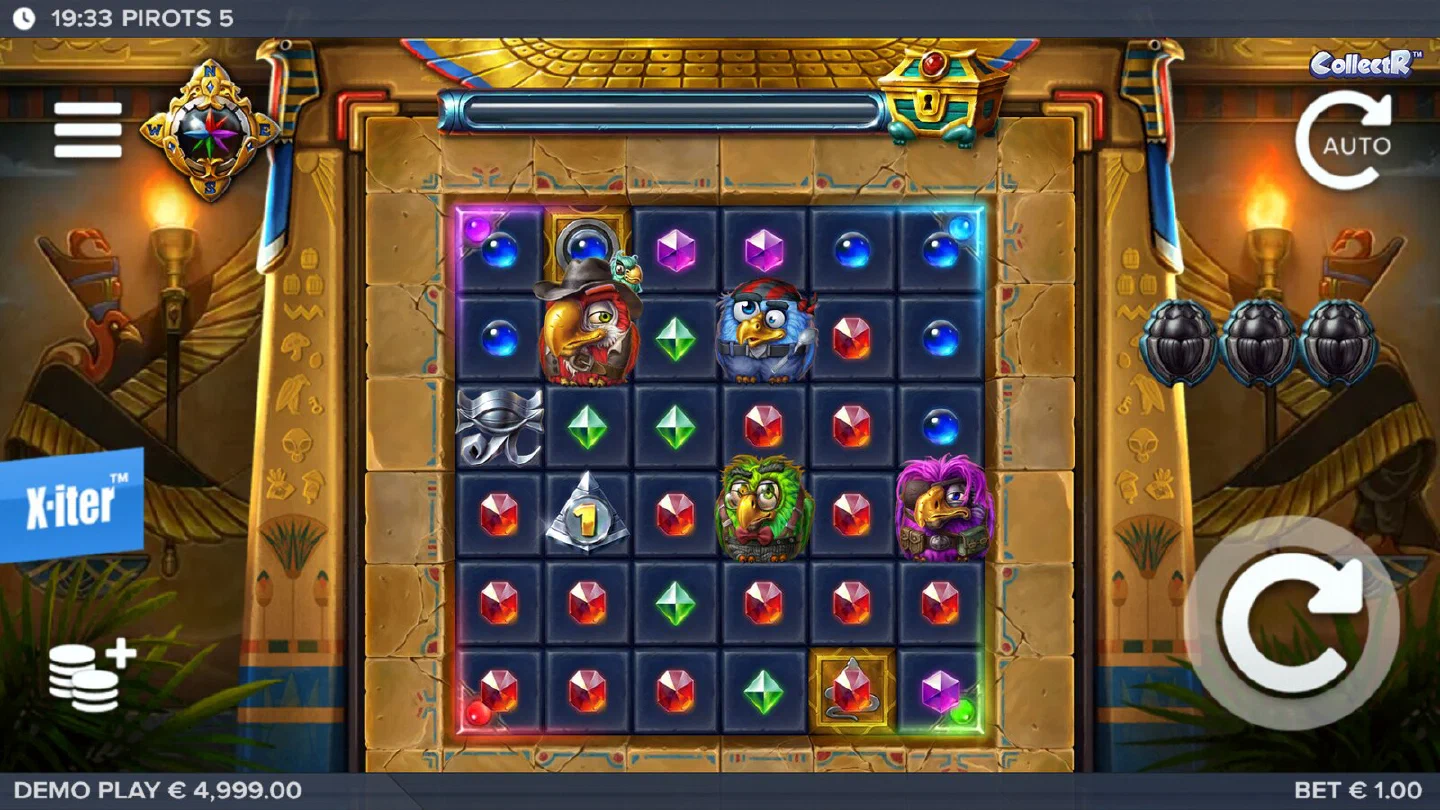
Collection instead of paylines. Four birds walk the grid and pick up gems in their own colour plus every feature symbol next to them, and they carry on while anything collectable is adjacent. Nothing lands on a line; the win is the path. If that is what you enjoyed, the trait to look for elsewhere is a game where the board state matters more than the final arrangement: cluster and collection games rather than ways games dressed up as them.
Progress that carries. Two layers of it here. Within a round, gems climb seven payout levels, so the same collection is worth a tenth of your bet at the bottom and 25x it at the top for red. Across sessions, the nine tokens, three in each world, unlock Boss Castle permanently, and a token pays as it lands at the value of a 5x coin. A game with a meter that resets every time you close the tab is not the same experience, whatever its features look like.
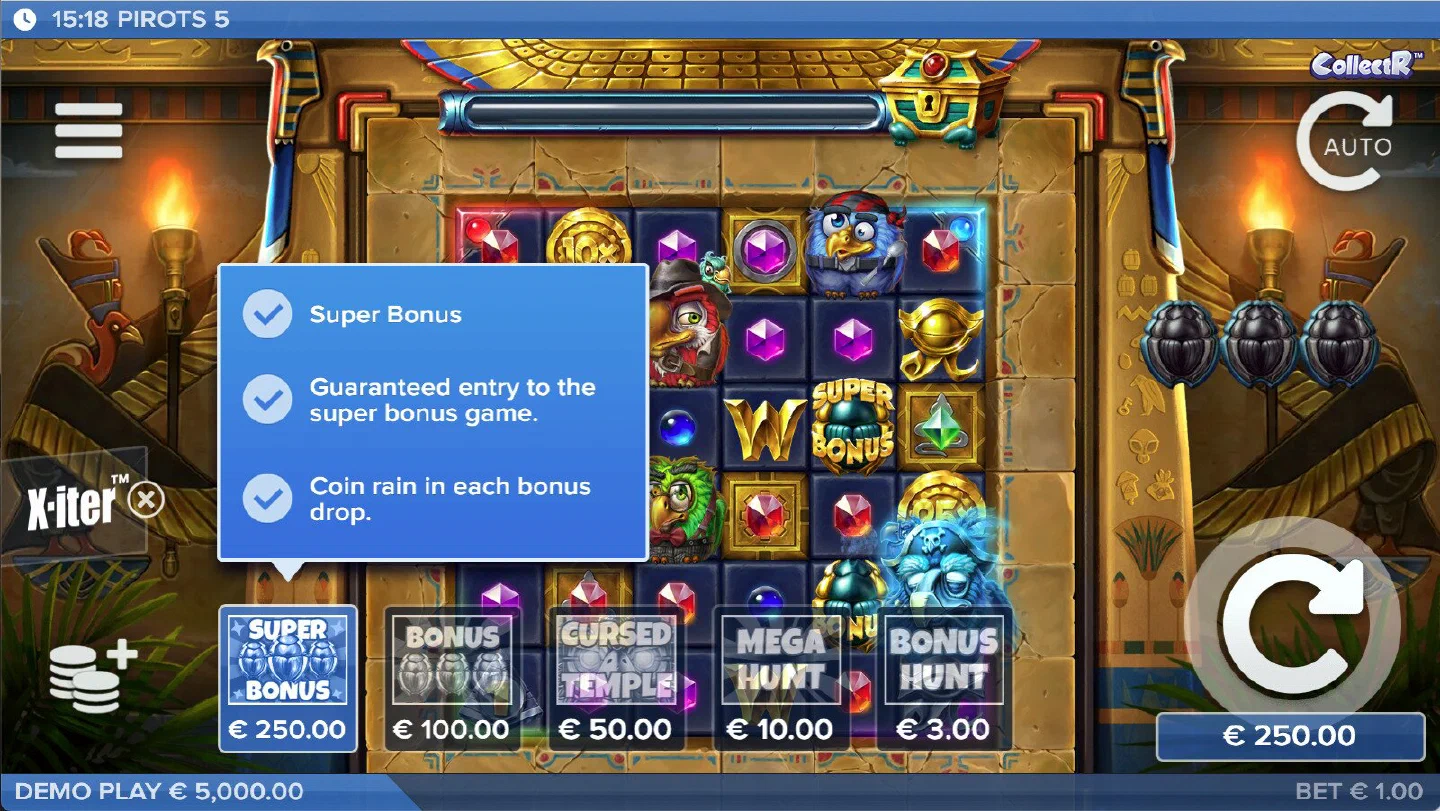
A bought entry that is honestly priced. X-iter runs 3x, 10x, 50x, 100x and 250x the bet, and the theoretical payout of every mode equals the game’s own RTP. That second half is the trait, not the buy button itself. When you shop for an alternative, the line to look for in the rules panel is the one about the payback of the bought mode, and if a game does not state it, the price on the button is only half the information.
Variance you can feel. Volatility rated 7 of 10, a win on 25.1% of spins by the product sheet and 26.11% in the demo configuration, and a 10,000x cap on a single round, all at a published payback of up to 96.0% depending on the casino and the market. Roughly one spin in four pays something, gems arrive at level 1 where red is worth 10 coins against a bet of 100, and the evening is decided by a handful of rounds. Match that spread and a game will feel familiar even if nothing on its screen looks like a bird.
The nearest thing we have covered is Aftermath from NetEnt, and the comparison block above shows why. Both games throw out fixed paylines, both grow their play area as a round develops, and both let you buy your way into the bonus from the base game rather than waiting.
They differ in what a win is. Pirots 5 pays what the birds collect, so position and adjacency decide everything and the board’s payout level is the thing you are building. Aftermath counts matching symbols anywhere in view and clears them in avalanches, with a round multiplier climbing as it goes. One rewards the shape of the board, the other the length of the chain.
They also differ in where the tension sits. In Pirots 5 it is in the meter and the queued feature releases; in Aftermath it is in the multiplier that resets when the round ends. If you want the version of the idea with persistent progress, Pirots 5 is the one; if you want everything decided inside a single round, the other is closer. The full comparison puts both sets of numbers side by side.
Pirots 5 is the sixth game under the name, which is where most of the confusion about it starts. Each chapter runs its own grid and its own maths, so a figure from one never applies to another: the original was a 5x5, the third went to 6x7, one instalment centred on a global multiplier and another went to space. This one is 6x6 growing to 8x8, with three playable worlds on an entry map and a fourth behind the tokens.
If what you liked was the studio’s house style rather than this specific release, the series page is the right stop, and the provider page covers how ELK Studios builds a game. If what you liked was this release specifically, the honest answer is that the three-worlds structure is unusual enough that the closest match to Pirots 5 is Pirots 5 in a world you have not played yet.
Studio and ceiling are the two easiest ways to sort a slot catalogue, and neither of them predicts whether a game will feel like this one.
Sorting by studio gives you a logo filter rather than a mechanic filter. ELK Studios made Pirots 5 and the five chapters before it, and those six alone run a 5x5 board, a 6x7 board, a global-multiplier variant, a space chapter and this 6x6 grid that expands to 8x8. Same house, six chapters, no two of them the same game. If the studio is what you liked, the provider page covers it properly.
Sorting by ceiling tells you about the extreme tail of a distribution and nothing about the spins in front of you. Pirots 5 caps a round at 10,000x the bet, which is 2,000 EUR at the 0.20 EUR minimum and 1,000,000 EUR at the 100 EUR top of the ladder, and that figure sits so far out that no session plans around it. The numbers that shape an evening are the ones just underneath: a win on 25.1% of spins by the product sheet and 26.11% in the demo configuration, volatility rated 7 of 10, and gems that pay 5 or 10 coins at level 1 against 2,500 for red and 3,000 for the premium group at level 7, with 100 coins to a bet. Match that shape and a game will feel familiar; match only the ceiling and it will not.
What actually transfers between games is structure: how a win is formed, what the board remembers, and what an entry into the bonus costs. Those are the things to compare, and they are exactly what the four questions below ask.
When a game is recommended to you as “like Pirots 5”, four questions settle it quickly, and all four can be answered from a rules panel in under a minute.
How is a win decided? If the answer involves fixed lines, the tempo will be different however the features look. Pirots 5 pays what four birds collect from adjacent positions, without fixed paylines, so the number of winning paths changes with every collection.
Does the board keep anything? In Pirots 5 gems climb seven payout levels and the board’s state travels into the bonus game: grid size, meter progress and gem level all inherit. A game where every spin starts from zero is a different proposition even if it looks identical.
What does the entry cost, and what does it do to the return? Five prices here, from 3x to 250x the bet, each carrying the game’s own theoretical payback. Ask a candidate the same two-part question: the price, and whether the payback is unchanged.
How wide is the spread? Volatility 7 of 10 with a win on 25.1% of spins and a 10,000x round cap is a specific shape: frequent small returns, rare large ones. A game with a similar mechanic and a much flatter distribution will feel nothing like it.
Answer those four and you will know within a minute whether something belongs in the same evening as Pirots 5.
A practical order, if you are genuinely shopping.
Start in the free demo with a specific question rather than a general spin: watch how far a single collection runs, and how the board looks after three queued feature releases land at once. That is the sensation you are trying to match, and a 25-round auto spin at the 1.00 EUR default gives you a reference you can hold against anything else.
Then play a world you have skipped. The Kraken’s coin game runs three drops that reset on a landing symbol and stretch a round unpredictably; the City of Gold plays its three drops across the full 8x8 board with the Mastermind expanding to cover up to 5x5 of it; the Cursed Temple hangs its coin game on the secret door clearing the grid. They are genuinely different experiences under the same maths, which is the cheapest variety available to you.
Only then go looking elsewhere, with the four traits in hand. And when you find something promising, do to it what you should have done here: read the return figure in its rules panel, check what its bought entry actually costs, and spin it free first. The slot’s main page has everything about Pirots 5 in one place when you want to come back.
// FAQ